Neo-Classical Piano prompts
Felt piano tone and restrained phrasing place Neo-Classical Piano in a close, reflective room. Sparse strings can widen a later section, but the piano touch and slow dynamic bloom should remain the center.
Published generation evidence
One v5.5 neo-classical Chinese folk hybrid
This record is adjacent to, but broader than, a pure Neo-Classical Piano prompt. It combines minimalist piano with pentatonic writing, named Chinese instruments, environmental sound cues, sparse percussion, a measured tempo, and explicit mix direction.
Neo-Classical Chinese Folk, winter poetic ballad. Pentatonic scale foundation with traditional guzheng arpeggios and bamboo flute (dizi) lead melodies. Erhu sustains emotional core. Pipa for rhythmic texture. Orchestral strings subtly support. Minimalist piano with Asian voicings. Clear and poignant, classical Chinese diction. Natural sound effects: wind through pines, distant temple bells, light snowfall ambience. Tempo: 62 BPM, rubato phrasing. Mix: warm analog feel, moderate reverb. Lyrical themes: plum blossoms in snow, ancient rooftops, nostalgic longing, serene solitude. Instrumental interlude featuring guzheng and erhu dialogue. Sparse percussion: finger cymbals, soft taiko rolls. Dynamic swells, breath pauses. Authentic cultural atmosphere, meditative and elegant.
Prompt-level observation: every instrument has a job: guzheng supplies arpeggios, dizi leads melody, erhu carries the emotional center, pipa adds rhythm, strings support, and piano provides minimalist voicing. The 62 BPM and rubato instruction control pace, while “moderate reverb” prevents the scene from becoming an unlimited cinematic wash.
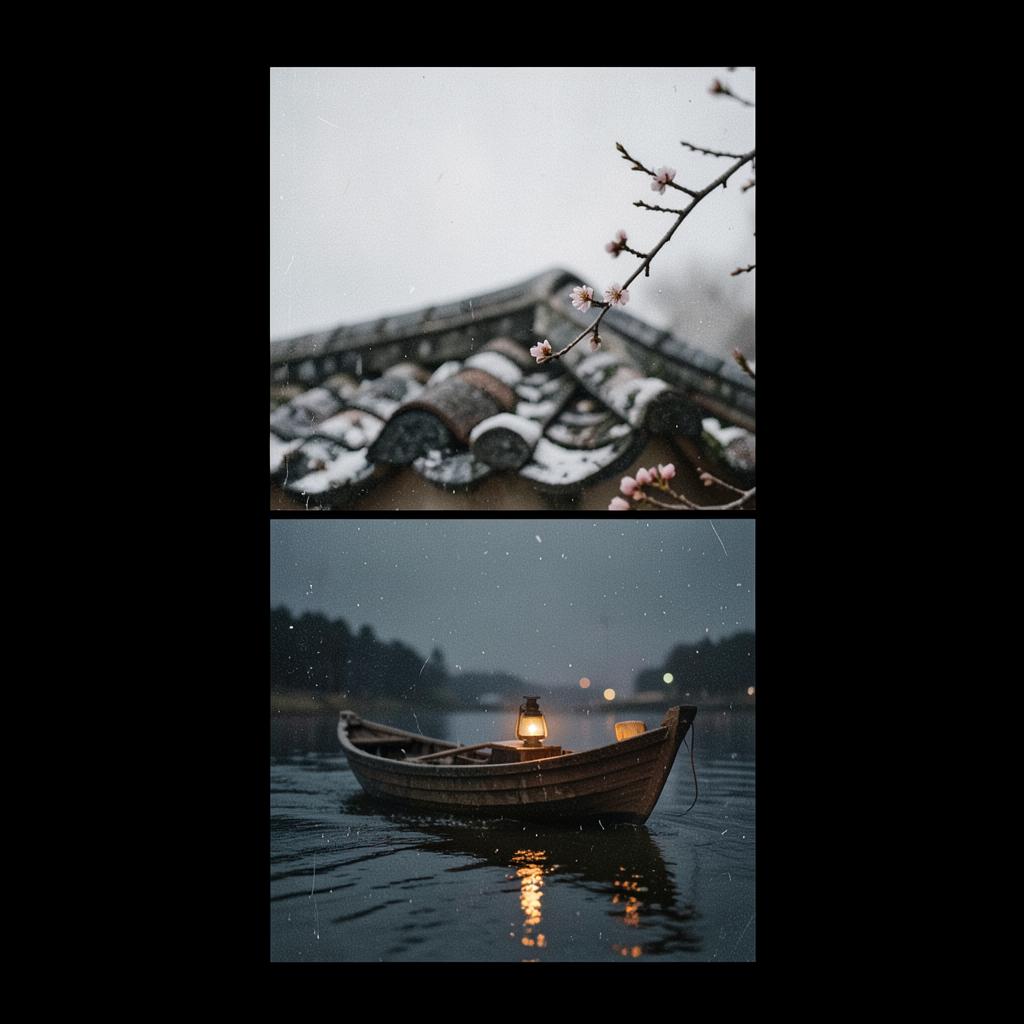
Evidence boundary: The Style is a Chinese folk hybrid, not a clean solo-piano test. It supports the page’s advice about instrument roles, tempo, rubato, dynamics, and room scale; it does not prove universal Neo-Classical Piano behavior.
What Neo-Classical Piano is
Minimal piano-led writing with modern cinematic air
Neo-Classical Piano has an audible center: soft piano attack, restrained repetition, patient dynamics, and a small amount of string or room support. If the result sounds too Hollywood or too sentimental, reinforce the felt piano texture, sparse arrangement, and reflective pacing before adding bigger adjectives.
What it sounds like
Intimate, restrained, and slowly unfolding
- Felt piano texture: a soft, close, tactile piano tone usually anchors the lane.
- Sparse accompaniment: strings, pads, or room bloom support the piano instead of overpowering it.
- Slow dynamic rise: tension often builds through repetition and space, not percussion impact.
- Reflective mood: the emotional color tends to feel contemplative, fragile, or quietly cinematic.
Core sonic markers
Make the piano touch and restraint obvious
Strong Neo-Classical Piano prompts usually follow neo-classical piano + tone detail + arrangement sparsity + dynamic behavior + emotional role. You can add one extra color like winter light, dusk, memory, fragile hope, or empty room, but the identity should still come from piano touch and pacing rather than generic “beautiful instrumental” wording.
How to prompt this subgenre
State the piano texture before the cinematic emotion
If the track becomes too trailer-like, remove oversized orchestral language and reinforce felt piano, sparse strings, and restraint. If it feels too empty, add one controlled widening cue such as low string swell, distant pad, or gradual harmonic lift without breaking the small-scale mood.
Prompt recipes
Choose the piano touch first, then the emotional arc
Use this when you want a clear modern piano result with restraint, space, and a dependable emotional arc.
Choose this when you want the emotion to feel close, delicate, and almost room-mic'd rather than sweeping.
Use a slightly broader lane when you want more rise and string support while keeping the piano at the center.
More copy-ready Neo-Classical Piano lines
Click to copy
Paste into Style or begin from Classical / Cinematic and narrow into a piano-first minimal lane.
FAQ
Why does it still sound like full film score?
How do I get repetition without boredom?
Can I add percussion?
Too pretty; want uneasy neo-classical?
Recording words: felt vs bright piano?
What to pair it with
Support the piano without inflating the scale
Use Production for room size and softness, Structure for slow build and fade logic, and Mood when you want the same piano engine to feel wistful, hopeful, desolate, or quietly tense.